Any business requires additional leads; however, having a website and advertising cannot ensure success. There are many cases where companies opt for digital marketing solutions but do not see any results as they do not have a proper strategy or plan.
Our team at The Branding Media not only focuses on driving traffic to your website but also on acquiring leads which will aid your company to grow. In this particular case study, we present how one Chandigarh-based business changed their online game and managed to increase their leads by three times per month.
The Client’s Challenge
The organization had an official website that provided quality services, but there were no online inquiries. Referrals made up the majority of their clients, leaving room for limited growth. The client approached The Branding Media with three primary goals:
- Increase qualified website leads.
- Improve Google search visibility.
- Get a better return on marketing expenditure.
Although the company had done some marketing in the past, they were having a hard time competing with their rivals.
Initial Website Audit
Any campaign was preceded by thorough digital marketing auditing that uncovered some problems such as:
- Slow website loading speed.
- Weak on-page SEO.
- Limited keyword optimization.
- Poor conversion-focused design.
- Low-quality content.
- Missing local SEO signals.
- No structured lead tracking.
Without fixing these foundational problems, running additional advertising would have produced limited results.
Step 1: Building a Strong SEO Foundation
The initial phase was geared towards making the website better for the users and the search engine algorithms. These modifications were:
- Technical Search Engine Optimization.
- Faster site load time.
- Mobile optimization.
- Easier navigation.
- Better internal linking.
- Optimized Meta titles and descriptions.
- Image optimization.
These changes created a stronger technical foundation for future growth.
Step 2: Local SEO Optimization
Because the client primarily served customers in Chandigarh, local visibility became a priority. Our Local SEO strategy included:
- Google Business Profile optimization.
- Local keyword research.
- Location-based service pages.
- Citation consistency.
- Review generation strategy.
- Local schema implementation.
Most companies that search for digital marketing in Chandigarh usually face intense competition in local search engine result pages (SERP).
Step 3: Content Strategy
High-quality content became the backbone of the campaign. We developed content focused on:
- Customer pain points.
- Frequently asked questions.
- Service-specific landing pages.
- Educational blog articles.
- Industry insights.
- Local search intent.
Every page was written with users first while following SEO best practices.
Step 4: Conversion Rate Optimization
Traffic alone doesn’t generate revenue. Visitors must become customers. To improve conversions, we:
- Simplified navigation.
- Added stronger call-to-action buttons.
- Improved contact forms.
- Optimized mobile usability.
- Added trust signals.
- Enhanced service pages.
Small improvements throughout the website significantly increased inquiry rates.
Step 5: Google Ads Optimization
The client was already spending on paid advertising but wasn’t achieving consistent returns. Our PPC strategy focused on:
- Better keyword targeting.
- Negative keyword optimization.
- Improved ad copy.
- Landing page alignment.
- Conversion tracking.
- Budget optimization.
This reduced wasted ad spend while improving lead quality.
Step 6: Performance Tracking
Every campaign decision was supported by data. We monitored:
- Organic traffic.
- Keyword rankings.
- Website conversions.
- Form submissions.
- Phone inquiries.
- Cost per lead.
- Return on ad spend.
Weekly performance reviews allowed continuous optimization.
The Results
After several months of consistent optimization, the business experienced measurable improvements.
Organic Growth
- Significant increase in Google rankings.
- Higher organic traffic.
- Improved local visibility.
- Better keyword performance.
Lead Generation
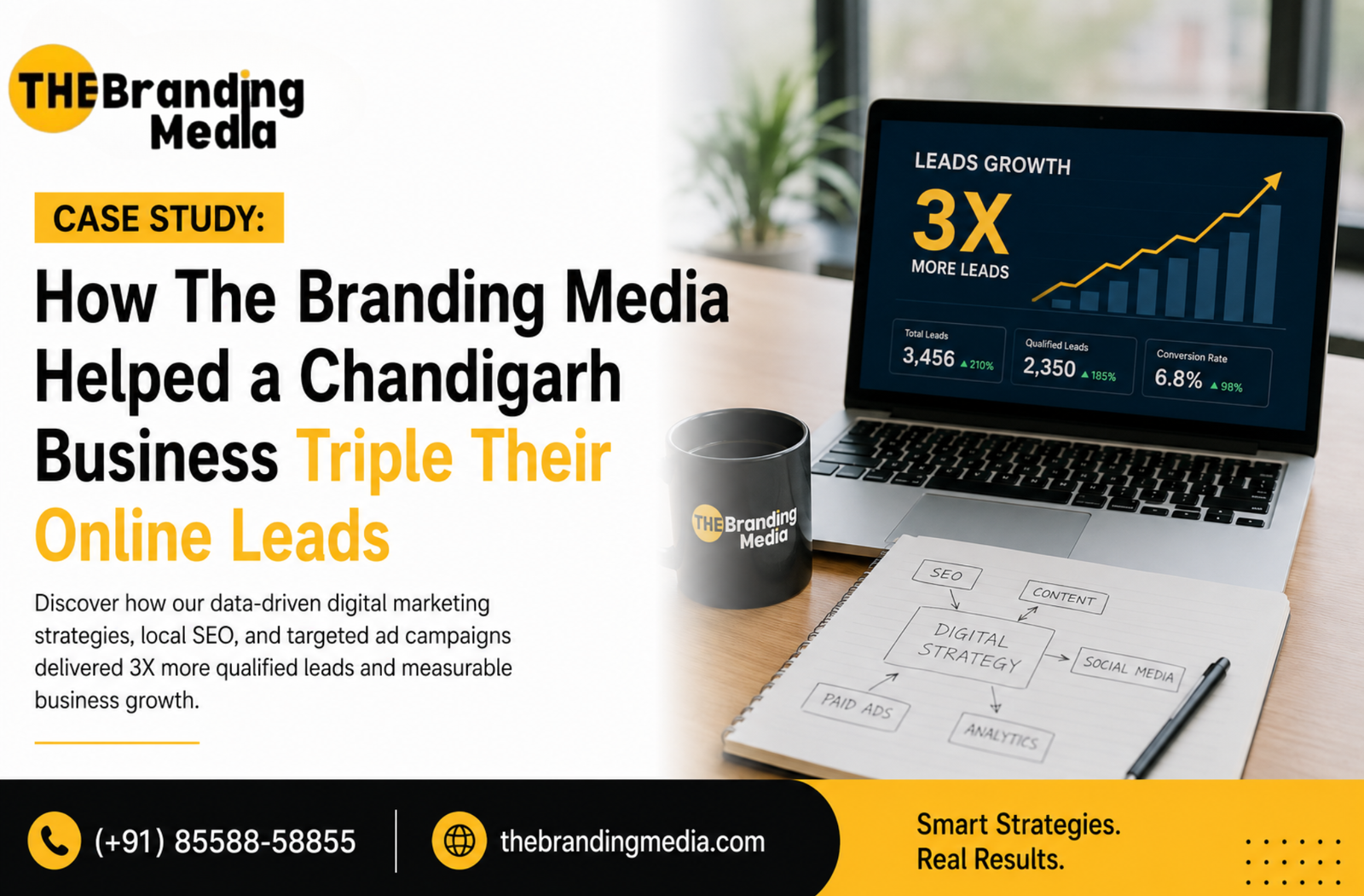
The business achieved approximately three times more qualified online inquiries compared to its starting point. The increase came from:
- Organic search.
- Google Ads.
- Local search.
- Better website conversion rates.
Higher Website Engagement
The visitors were spending more time on the website due to the presence of valuable information on it. Positive improvements included:
- Lower bounce rate.
- Higher engagement.
- More service page visits.
- Increased contact form submissions.
Why This Strategy Worked
Many businesses expect quick fixes. Instead, this campaign focused on building long-term growth through several connected strategies. Success came from:
- Technical SEO improvements.
- Better website usability.
- High-quality content.
- Local SEO optimization.
- Continuous campaign monitoring.
- Conversion optimization.
- Smart advertising management.
Each strategy supported the others, producing sustainable results.
Lessons for Small Businesses
Every business can learn valuable lessons from this campaign. Focus on:
- Building a fast website.
- Creating helpful content.
- Investing in SEO.
- Tracking every lead.
- Improving user experience.
- Constantly optimizing.
All channels working in unison yield the best outcome in digital marketing.
How The Branding Media Approaches Every Project
No two businesses have identical goals. That’s why The Branding Media develops customized digital marketing strategies based on industry competition, customer behaviour, business objectives, and available budget. Our services include:
- Search Engine Optimization (SEO)
- Google Ads Management
- Social Media Marketing
- Website Development
- Content Marketing
- Local SEO
- Conversion Rate Optimization
- Performance Analytics
Every campaign is built around measurable growth rather than vanity metrics.
Conclusion
In conclusion, it should be noted that digital marketing is a strategy rather than quick fixes and hacks. Companies which are willing to succeed in this area need to concentrate on website improvement, creation of useful content, monitoring of its performance, and adaptation to the behavior of customers. Making the right investment now will pay off in the future.
Frequently Asked Questions
How long does digital marketing take to show results?
It is dependent on the marketing channel used. In the case of Google ads, there will be traffic generated almost instantly, but for SEO, one has to wait for 3-6 months before any changes are evident.
What are the key metrics to track for digital marketing results?
Some of the important metrics for digital marketing are:
- Website traffic
- SEO ranking
- Conversion rate
- Cost per lead (CPL)
- CTR (Click Through Rate)
- ROI (Return On Investment)
- Bounce rate
- CAC (Customer Acquisition Cost)
- Form fill-ups
- Phone calls and inquiries
Measuring these KPIs enables companies to determine the effectiveness of their campaigns.
How can I measure the ROI of my digital marketing campaigns?
You can measure ROI by comparing the revenue generated from your marketing efforts with the total campaign cost. Monitoring conversions, lead quality, sales value, and customer acquisition costs through tools like Google Analytics and CRM systems provides a clear picture of marketing effectiveness.
Why is tracking digital marketing results important for business growth?
Tracking performance helps businesses identify which strategies generate leads, sales, and revenue. It allows marketers to optimize campaigns, reduce unnecessary spending, improve customer targeting, and make informed decisions that support long-term business growth.
Where can I find reliable tools to track digital marketing performance?
Popular tools include:
- Google Analytics 4 (GA4)
- Google Search Console
- Google Ads Dashboard
- Google Tag Manager
- Google Business Profile Insights
- Microsoft Clarity
- Looker Studio
- Meta Ads Manager
Using multiple tools together provides a more complete view of website performance, user behavior, and campaign results.
Who is responsible for analyzing digital marketing results within a company?
The responsibility usually falls on the digital marketing team, SEO specialists, PPC managers, marketing analysts, or a digital marketing agency. Business owners and marketing managers also review reports to evaluate performance and make strategic decisions based on the data.
How often should digital marketing campaigns be reviewed?
Campaigns should be monitored regularly, with weekly performance checks and detailed monthly reviews. Frequent analysis helps identify trends, optimize budgets, improve targeting, and respond quickly to changes in customer behavior or market conditions.
Can small businesses achieve similar digital marketing results?
Yes. Small businesses can achieve significant growth by combining SEO, local SEO, content marketing, paid advertising, and conversion optimization. The key is to use a well-planned strategy, monitor performance consistently, and make data-driven improvements over time.